
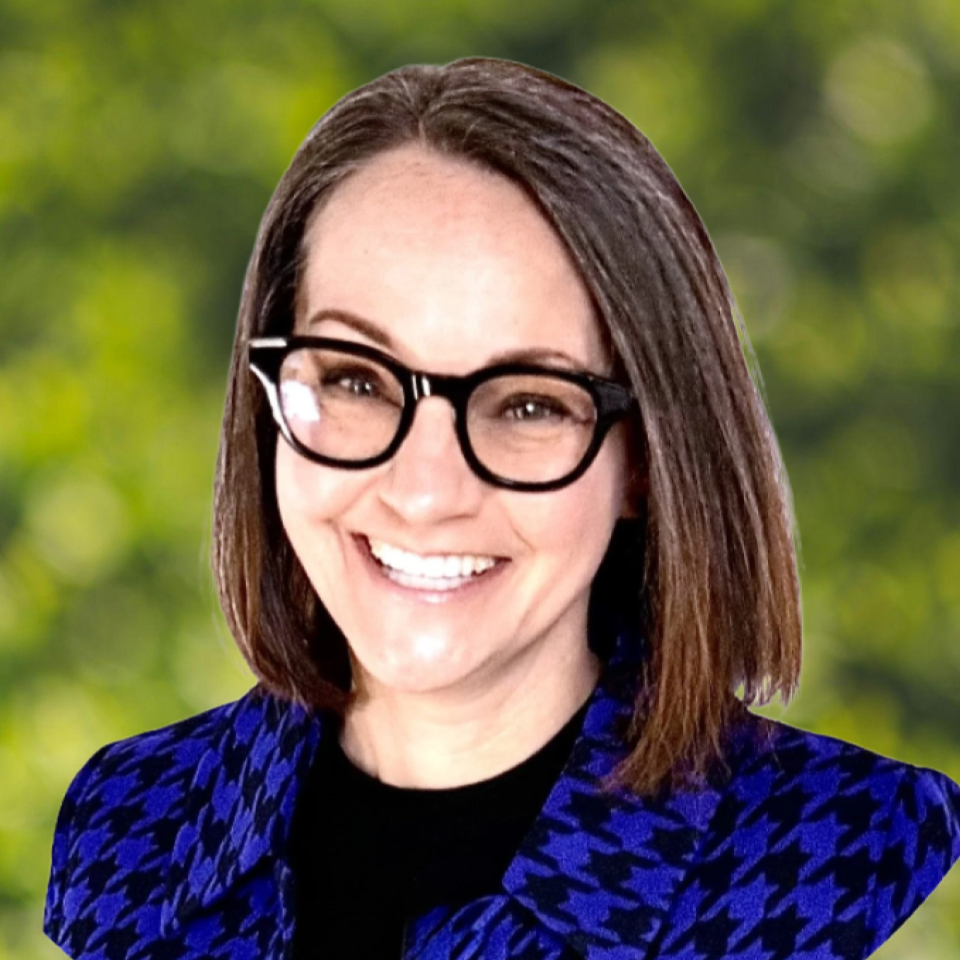
Stephanie Glazer
Managing Director
Stephanie Glazer has spent more than 20 years building systems that work, not just on paper, but in capital markets, in municipal budgets, in the governance structures that determine whether climate ambition becomes durable change.
Working across sustainability strategy, climate resilience, infrastructure, and policy, she approaches complex challenges by first understanding how systems function: identifying underlying structures, aligning incentives, and creating accountability mechanisms that make ambitious commitments operational. That perspective has informed her work across the public, private, and nonprofit sectors.
At the Sustainability Accounting Standards Board (SASB), she authored sector-specific sustainability standards now embedded in capital markets disclosures worldwide. The work required distilling the complexity of value creation within each industry into metrics that are both financially material and operationally practical. As a member of the expert working group for the Science Based Targets initiative, she focused on the tension between high ambition and what is commercially and operationally achievable. She has also advised on Climate Action Plans for cities in Oregon and California, helping translate ambitious climate commitments into actionable implementation pathways.
In the infrastructure sector, her work has focused on integrating environmental performance with long-term operational value. At Tetra Tech, she worked on remediating industrial sites and restoring natural habitats while generating co-benefits for air quality, biodiversity, and public health. At Arup, she developed climate action plans and decarbonization roadmaps for cities and corporations, and created a carbon accounting protocol for the built environment adopted through the Clinton Climate Initiative.
Her policy work has similarly focused on building rigorous analytical foundations for climate action. For the Center for Climate Strategies, she developed greenhouse gas quantification models supporting state-level energy policy spanning both demand-side and supply-side initiatives. She also developed the carbon accounting framework for a pioneering low-carbon, district-scale timber development in Helsinki, commissioned by the Finnish Innovation Fund (SITRA). The project served as a demonstration of mass timber construction at scale and ultimately helped inform Finnish national construction policy — an example of how project-level innovation can travel upstream into regulation.
Central to Stephanie's work has been her ability to align diverse perspectives around complex sustainability objectives. At SASB, she helped build consensus among corporations, investors, NGOs, and subject matter experts on the definition and application of financial materiality. She has chaired the City of Lake Oswego Sustainability Advisory Board, served on the Lake Oswego School District Sustainability Committee, and guided more than 250 nonprofit chapters worldwide in developing locally grounded climate action aligned with global targets.
Innovation and implementation have remained recurring themes throughout her career. Early work with the U.S. Navy provided firsthand experience in how emerging technologies become embedded in mission-critical operations. Today, she brings that perspective to climate technology investing as an investor and active member of E8 Angels, where she evaluates early-stage ventures across energy, water, materials, and food systems, applying deep expertise in ESG, carbon management, and sustainability strategy to investment due diligence.
Most recently, Stephanie has focused on one of the defining infrastructure challenges of the coming decade: connecting energy, water, food, and land systems in ways that generate investment-grade returns while delivering community-directed benefit. Her CIRCLE framework establishes the financial and governance architecture to structure data center development so that it benefits rather than burdens host communities. Contracted service obligations and enforceable community assurances run for the life of the project, while operators gain strategic advantage and investors gain return opportunities.
Stephanie holds a Bachelor of Science in Environmental Systems Engineering from the University of Pennsylvania and has completed executive programs at the University of Oxford, UC Berkeley School of Law, and the Aspen Institute. She is based in the Pacific Northwest.